


PERFORMING THERMAL HYDRAULIC SAFETY ANALYSIS FOR NUCLEAR POWER PLANTS

Course
Outilne and Content
The course aims at a transfer of knowledge on the understanding of complex system behaviour taking place in accidental situations in nuclear systems and specifically how this knowledge is linked to the daily work performed by analysts or engineering support companies at the power plant. The focus will be placed in relating the assistant knowledge on pressurized water reactors (PWR) plant systems with the (1) Transient and Accident Analyses (Chapter 15) required at plant’s Final Safety Analysis Report and (2) beyond design basis event that might be part of Probabilistic Safety Assessment (PSA) event trees. Keeping this objective in mind, the course will cover some transients, design basis accidents (DBA) and beyond DBA accidents. The approach will be the following:
·
An introductory theory on systems related to the transient and the expected evolution of the main parameters. The acceptance criteria to be fulfilled by the design will be introduced as well.
·
Searching and understanding experimental or plant results directly related to the selected transient/accident.
·
A simulation of the particular transient will be performed allowing the participants to plot several variables in order to analyze the thermal hydraulic plant response.
·
A discussion on the adequacy of the current design to meet with the acceptance criteria will be done.
The course will cover through this approach the following items:
·
PWR hydraulic systems related to transients.
·
Expected phenomenology in the transient.
·
PWR protection system and engineered safety features actuation signals.
·
Expected operators actuation during the transient according to their procedures.
·
Analysis of RELAP5 results.
·
NUREG-0800 standard review plan for Safety Analysis Report.
Target of the course
The seminar is open to vendors, utilities, regulatory bodies, national laboratories, consulting companies and universities. A maximum of 30 participants will be accepted from which 15 may come from ANNETTE organizations free of charge.
.
Requested
Background
The participants are assumed to have basic knowledge on nuclear systems and PWR fundamental basics on reactor theory. Please note that this is not a course on RELAP5, neither an introductory course on PWR systems. RELAP5 will be used as a tool but the course is not intended to train on RELAP5 usage and no previous experience with system codes is required. The RELAP5 model will be configured in a way that the participants will be able to operate the system components by simple flags.
.
Method of Delivery
The method will combine theoretical explanations of the systems involved in the transients and the expected phenomenology taking place in the transient, observation and understanding of the transient and exercises with RELAP5 simulations.
Dates and location
The course on “Phenomenology of Design and Beyond Design Basis Accidents” will take place on 9-13 July at The Barcelona School of Industrial Engineering (ETSEIB). The School is part of the Technical University of Catalonia - BarcelonaTech (UPC), a public institution dedicated to higher education and research, specialized in the fields of engineering, architecture and science and is located in Barcelona with good connections to both the airport and the city center.
The course is organized by the Advanced Nuclear Technologies group (ANT) from the Technical University of Catalonia. ANT has a long experience in R&D and teaching in Nuclear Engineering, principally nuclear reactors technology, thermal-hydraulic analysis and safety for both fission and fusion reactors.
Final
Examination
There will be a final written exam
Registration
The course is free of charge for ANNETTE attendees. You can register at:
Lecturers

Dr. Jordi Freixa
Jordi Freixa Graduated in Physics by the University of Barcelona in 2001 just before joining the PhD Nuclear Engineering Program at the Technical University of Catalonia (UPC). He finished his PhD on “SBLOCA transients with boron dilution” in 2007. Jordi worked as a post-doc for 4 years at the Paul Scherrer Institut (PSI, Switzerland) participating in several projects including safety analyses of LOCA and SBLOCA scenarios for the EPR Olkiluoto III nuclear power plant. He continued at PSI as a senior scientist for 2 additional years and lectured at the Nuclear Engineering Master program of the Technical University of Zurich (ETH). Jordi joined ANT in January 2013 under a UPC/PQS contract. His main areas of research are the validation and application of best estimate thermal hydraulic codes for LWRs which he combines with teaching activities in the European Master of Nuclear Engineering.
.

Daniel Suárez
Daniel Suàrez i Cambra graduated in Industrial Engineering by the Technical University of Catalonia (UPC), MSc Nuclear Engineer by the ENEN Consortium (EMSNE) and is currently developing his PhD at ANT (T4F). His main professional activity is devoted to Ascó NPP (PWR) operators training at the full scope control room simulator at Tecnatom, S.A. He joined the department as Assistant Associate Professor in 2016, lecturing at Master level. His research works related to his PhD are oriented to the breeding blanket MHD phenomenology at fusion reactors.
.

Max Casamor
Max Casamor started his PhD on 2016 on the field of thermal hydraulics. The main goal is to establish a coupling between COBRA-TF and RELAP
.
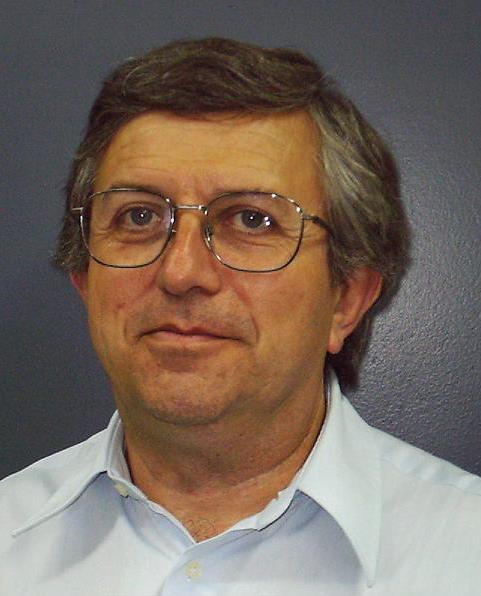
Prof. Francesc Reventós
Professor Francesc Reventós obtained his Doctor-Engineer degree (1982) at the “Institut National Polytechnique de Grenoble” (France). He is attached Professor of the Department of Physics and Nuclear Engineering at the Technical University of Catalonia (UPC) collaborating also in the Institute of Energy Technologies of the same university. From 1985 to 2001 he was Responsible of Plant Dynamic Analysis in the utility organization operating Ascó and Vandellòs Nuclear Power Plants (NPP). In 2002: Visiting Researcher for the summer semester at Massachusets Institute of Technology (MIT). From 2005, he is an Honorary member of the Board of Professors of Nuclear Engineering of the University of Pisa. He has participated in a large number of cooperative projects in OECD framework and collaborated with other universities like MIT, Pisa, Purdue, Penn State, Texas A&M, Zagreb as well as the Spanish Safety Council and laboratories and engineering companies. Prof. Reventós has more than 30 years of experience in the preparation and qualification of the thermalhydraulic models for NPPs as well as its use in fields like operation support, Probabilistic Safety Assessment, training, licensing and fuel management.
.
Universitat Politècnica de Catalunya
Departament de física
Av. Diagonal 647
Barcelona 08028, Spain